| Economy | GDP (purchasing power parity in USD) US$16.146 billion (2016 estimate) |
| Population | 332,529 (2016 estimate) |
| Corruption | According to Transparency International’s “2015 Corruption Perceptions Index,” Iceland is the 13th “cleanest” (i.e., least corrupt) country out of the 168 surveyed. |
| Economic forecast | Economic growth is strong with continued expansion in tourism, robust private consumption, and favourable terms of trade. Steep wage gains, employment expansion, and large investments fuel domestic demand. The capital controls introduced during the financial crisis are being lifted, according to the Organisation for Co-operation and Development. |
| Additional resources | Iceland’s official tourism site. |
| Island Monitor, English language news website. | |
| Independent People, a Nobel Prize-winning account of poor Icelandic farmers in the early 20th century. | |
| Dark Iceland Series, an “Icelandic noir” crime series by Ragnar Jónasson, head of legal at Gamma, an Icelandic asset management company. |
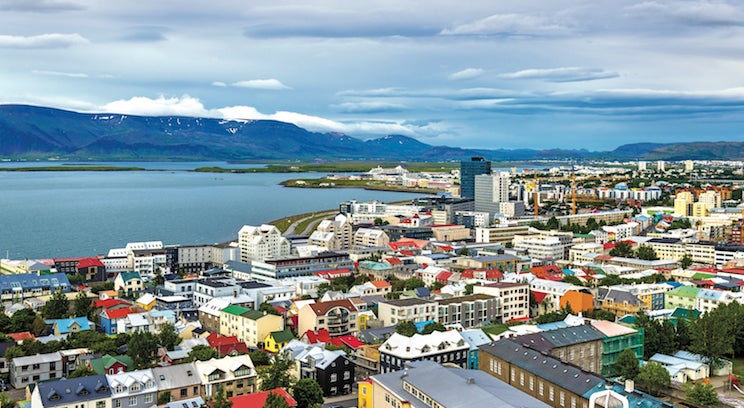
Iceland is a small island in the North Atlantic Ocean. Often called the “land of fire and ice,” due to its many volcanoes and glaciers, Iceland’s climate is not as bad as its name suggests. The winters are mild and dark but the summers are pleasantly warm and bright.
Icelanders are liberal, honest, friendly, and enjoy high equality. The official language is Icelandic, but everyone also speaks English. Most Icelanders are well educated and are quick to adopt new technologies and trends.
The vast majority of Icelanders live in the greater Reykjavík area. Because everything is less than 15 minutes away, travel time is usually not taken into account when planning meetings. As a result, being “fashionably late” by five to 15 minutes is quite common. Casual meetings are the norm, but Icelanders, ever flexible, can easily adapt to a more formal setting.
Icelanders are typically referred to by their first name, as their last name indicates the first name of their father. As an example, in my family of five, we have four different surnames: Eiríksson (myself, son of Eiríkur), Bentsdóttir (my wife, daughter of Bent), Tómasdóttir (my daughters), and Tómasson (my son).
As descendants of the vikings, we don’t use the word “please” when asking for something (but we do try to use that word correctly in English). We are not used to polite gestures, like holding the door or elevator for others, and therefore may feel awkward when it’s done.
When it seems impossible to meet a deadline, you should raise your concerns, but shouldn’t worry too much if a promise has been made. Icelanders commonly use the phrase “thetta reddast,” which means “this will pan out,” and it usually does. Icelanders will do whatever they can to keep their word because it’s absolutely vital to protect your reputation if you want to succeed on the small island.
Once you arrive, be prepared to answer the question: “How do you like Iceland?” Icelanders are proud of their country and enjoy discussing its nature, its history, and its people. It is a guaranteed icebreaker.