
And that’s a wrap for this 2025 ACC Annual Meeting! Come and join your peers next year in Boston for our 2026 ACC Annual Meeting, and check out the important insights, exciting moments, and major takeaways from each day below. Whether you joined us in Philadelphia or followed from afar, we’re here to share the best of what happened at the Meeting.
SUNDAY | MONDAY | TUESDAY | WEDNESDAY
ACC in the News
The 2025 ACC Annual Meeting generated buzz across leading legal outlets. Explore highlights below.
Please note: Some of the articles linked above may require a subscription or account login to view in full.
Event Insights & Takeaways
- 5 Takeaways From The ACC's Annual Conference (Law360 Pulse)
- Data Center Boom Presents New Challenges for In-House Counsel (Bloomberg Law)
AI & Innovation
- Bloomberg Law Highlights Tools to Empower In-House Legal Teams at 2025 ACC Annual Meeting (Bloomberg Law)
- The Questions In-House Attys Should Be Asking About AI (Law360 Pulse)
- ‘It’s Like Ozempic for Legal Work’: AI Wows In-House Lawyers but Also Leaves Them Wanting (Law.com)
- Attorneys Warned to Vet That Tools Billed as Gen AI Are Genuine (Bloomberg Law)
- John Rondini Featured In Law.com Article Highlighting ACC AI And Data Privacy Panel (Mondaq)
- AI Influence on Privacy, Patents Set to Spur Wave of Litigation (Bloomberg Law)
Leadership & Career Development
- ‘Excellence Is Your Greatest Currency’: NFL Agent Nicole Lynn on Law, Losses and Leading With Grit (Law.com)
- In-House Attys Must Show 'Managerial Courage' In Leadership (Law360 Pulse)
- GE Atty On Leading The ACC: Be Transparent, Authentic (Law360 Pulse)
- Law Leaders Must Drive Change, Communicate It Well, Lawyers Say (Bloomberg Law)
Corporate Strategy & Risk
- Andrew Ross Sorkin Urges In-House Lawyers to Rethink Risk and Communication (Law.com)
- Demonstrate Corporate Ethics, Not Just Compliance, Officers Say (Bloomberg Law)
- CLOs Must Keep Boards Abreast of Trump Policy, Legal Changes (Bloomberg Law)
- Corporate Legal Leaders Strategize ‘Tremendously’ Evolving Role (Bloomberg Law)
Wednesday, October 22
Ethics, reality shows, football, and laughter

Ethics. Reality shows. Football. Laughter. Yes, these five words can make sense together — at least when these ingredients are mixed together by Stuart Teicher, The CLE Performer & Adjunct Faculty, Georgetown University Law Center, into a colorful cocktail during the session Philly Special: What the Greatest Play in Super Bowl History Teaches About Ethics and Lawyer Resilience.
Through a high-energy session that had the audience cheer and laugh, attendees reviewed key rules of professional conduct and explored their implications in today’s legal practice. Teicher drew analogies from a famous football play, a Rocky movie, and more. The session focused on key duties such as competence, diligence, and communication.
Below are six takeaways from Teicher’s insights:
- Explain to the client the uncomfortable truth of the situation at hand — as unpleasant as it may be for them to hear. That takes courage. Don’t substitute your decision making for the client’s decision making.
- Have the competence needed to back up your position that the client may not like to hear.
- Making decisions under pressure requires resilience. It takes courage to take tough decisions — trust your judgment.
- Maintain your skillset, including your understanding and command of technology.
- Generative AI presents substantial ethical risks for lawyers who use such tools. Teicher used a compelling analogy: Let’s say a vendor claims that their tool only has a 2-percent risk of hallucinations. Assuming that’s true, are you fine with those odds? If you were told there is a 2-percent chance that your car would explode, would you take that chance?
- Mental health matters to ethics. You can’t make smart decisions if you don’t take care of yourself, Teicher said. He pointed out rules that require lawyers to not represent a client or to withdraw from representation — for example, if the lawyer’s physical or mental condition materially impairs the lawyer’s ability to represent the client.
The AI train is moving fast; help your businesspeople learn to ride it more safely
We cannot stop the train, but we can get on board and ask the questions needed, Elizabeth Jones, Associate General Counsel, Breakthrough T1D, shared, in the session AI Disruption: Navigating the Evolving Legal Technology Landscape. Help the business understand how to ride it more safely for your organization. The more AI we and the business use, the higher the impact is going to be in terms of risk.
The panel, which also included Marlene Gebauer, Principal, SparkMind Advisors LLC; Sajju George, General Counsel, Apex LPO; and Om Jahagirdar, Deputy General Counsel, Amtrak, shed light on AI use cases and how to help the business work through the implications of their use cases and mitigate risks.
- Train your employees to understand how to use the technology, Jahagirdar shared, so they understand the limitations of these tools, such as the risk of hallucinations.
- Be proactive. Businesses must be able to prove that they’re doing what they’re supposed to do — that they’re using AI responsibly and in compliance with applicable laws and regulations.
- On Agentic AI: Make sure you have the tools to monitor what’s being done, Jahagirdar shared. Put in place a stop process, someone who vets sensitive actions and decisions that are being made by the tool.
- Show the ROI. AI tools have a cost. Your CFO will want to know what the business case it for these expenses. Consider metrics, such as duration of contract legal review, client satisfaction. At the same time, be mindful of people’s concerns that AI might lead to their job being eliminated.
- Involve your IT department. IT doesn’t have to drive the AI policy, but they have to be involved, shared George.
Plan your next internal investigation
Ignorance is not bliss when it comes to complaints and allegations of misconduct, shared Ruth Rauls, Partner, Labor & Employment, Saul Ewing LLP in the session on The In-house Lawyer’s Role in Internal Investigations.
Attendees heard practical insights and methodical checklists from the panel, which also included in-house counsel Kimberly Blanche, Senior Director, Legal, Bausch + Lomb; Sheila Luken, Associate General Counsel, Transamerica Life Insurance Company; Jennifer McGlinn, Vice President & General Counsel, Eurofins NSC US, Inc.; and Kathlyn Van Buskirk, Director of Compliance & Privacy, Assistant General Counsel, Huntington Ingalls Industries, Inc.
Below are some of the key takeaways. Also, find additional resources and insights on internal investigations in the ACC Resource Library.
- Investigations can be costly and disruptive, but they are needed, to learn the facts, resolve the issues, and preserve legal defenses.
- Investigations may be triggered internally, for example as a result of internal guidelines, internal audits, or allegations of fraud or misconduct. They can also have external triggers, such as a lawsuit, a subpoena, a demand letter, or charges or inquiries from a regulatory body.
- Consider whether to use an internal or an external investigator. Consider where the findings from the investigation will go – in a litigation? In a report to a regulatory body? To your board? To your auditors? This may weigh in favor of engaging an external investigator.
- Avoid placing in-house counsel in a position of becoming a fact witness should litigation arise from the investigation.
- Consider the power and political dynamic that may be at play. If you opt for an internal investigator, what is the level of the investigator vs. the level of the person being investigated? Is the person being investigated an executive? That’s a factor that weighs in favor of using an external investigator.
- Set goals and be consistent. You want to set goals for the investigation itself, Blanche shared. And ensure that the conduct of the investigation is consistent with how employees’ conduct in other matters has been investigated.
- Consider possible concerns, such as discoverability of the investigation materials, employee privacy issues, risks of retaliation, and costs of the investigation.
- Protect privilege. If you engage outside counsel to conduct the investigation, ensure the engagement letter specifies that they are being retained not only to investigate the facts, but also to provide legal advice. Separate legal advice and business advice in communications.
- Use an Upjohn warning when interviewing employees (at least in US contexts).
- Expect the unexpected, such as uncooperative witnesses, people using recording devices during the interview, witnesses bringing a friend or an attorney to the interview, witnesses surfacing new claims during the interview or making threats against the investigator or other people.
- Once you’ve gathered the information. Evaluate the credibility of the witnesses. Weigh the evidence gathered from witnesses and the documents reviewed. Make factual determinations.
- Consider how to structure the investigation report. Ensure it details factual determinations.
A fireside chat with two ACC presidents
ACC’s business is about connection and community engagement. The power of the engagement within the ACC community continued to manifest itself in that special event on the third and last day of an outstanding 2025 ACC Annual Meeting.

A large audience of attendees gathered in a vast ballroom of the Philadelphia Convention Center to listen to the fireside chat between ACC’s new upcoming President & CEO, Jason L. Brown, and ACC’s current President & CEO, Veta T. Richardson, who is leaving ACC after leading the association for the past 13 years. Brown shared his enthusiasm at taking this new role leading ACC. Richardson highlighted the growth of the ACC community.
A long-time member and leader of the in-house community, Brown also shared about the powerful experience for in-house counsel to be here at the ACC Annual Meeting. You come here, and you have a great time connecting with your peers, who years from now may be your colleagues, or your adversaries. You develop rich connections and a sense of community that is transformative to your career. As Brown stated, ACC is for in-house, by in-house.
Rendez-vous in Boston! Brown shared his excitement at the perspective of seeing attendees at next year’s ACC Annual Meeting in Boston. Get ready to join us next year!
Tuesday, October 21
A powerful conversation on life, grit, purpose, and success

Powerhouse NFL agent. Attorney. These words describe Nicole Lynn’s dual professional roles. What these descriptors don’t tell is the compelling story of how she built this successful career through grit and resilience. Drawing from her life experience, she shared insights on her trajectory and what drove her success. Her riveting interview was conducted by Emmy Award-winning sportscaster Lindsay Czarniak, after an inspiring introduction by Rupali Patel Shah, Head of Legal Solutions & Alliances for North America at Dilitrust. Below are some of the key takeaways from Nicole Lynn’s powerful insights.
Grit. For Lynn, success didn’t come easy. She shared how as a child, eating the next meal was not guaranteed. She started her career as a financial advisor, before pivoting to law. And decided to pursue her dream of being a sports agent while working in the securities practice at her law firm. Lynn shared that developing a career as a sports agent takes a lot of persistence, and resources to cover the substantial expenses needed — for example to fund the players’ training programs.

“I’m a hustler,” Lynn shared. She described how she would reach out, follow up, and go to the players’ football games to convince them to engage her — all while billing thousands of hours at the law firm. And how she used her salary from the law firm to fund her efforts to grow her career as an agent.
Excellence is key. How to develop a sense of grit? Excellence is your greatest currency, a law firm partner shared with Nicole. If you’re excellent, they can’t leave you out, they can’t take your seat away. Be excellent at everything you do. Find the space where you can be excellent.
Resilience. Nicole shared how in her efforts to sign players, she once drove for hours to a football game and stood under pouring rain and in the mud to try to talk to a player. But instead of taking her seriously, the player ridiculed her, mockingly laughed at her, and walked away. In this low point of tears and desolation, Lynn received a key piece of guidance from a friend: You’ve got to get comfortable with losing. Ultimately, her efforts to sign players paid off. Her resilience led her to sign top college football player Quinnen Williams. It turns out Williams had done an internet search on Lynn, and he had come across a TED Talk she had delivered on being dissed. Looking back, how Lynn processed these painful setbacks enabled her success. Then other top football players engaged her, including Jalen Hurts, now a famed quarterback for the Philadelphia Eagles.
The power of education. Education is key, Lynn pointed out. People can demean you, they can take everything from you, but they can’t take your education, your knowledge.
Taking your seat at the table — early on. Lynn shared how she went into roles and places where she felt like the odd person out, where she didn’t fit the typical profile of the group. Women tend to wait to be in executive positions to fight for equality, she shared, but the disparity starts early on in professional life, in entry-level positions — when you’re not invited to the golf party, or not included in the email chain on a work matter. Push for your seat at the table early on. That may mean getting into uncomfortable discussions to ask being included and treated equally. Lynn also shared about the importance of friends, family, and people who were not jealous and cheered for her.
Purpose. Finding your life’s purpose is the most important mission, Lynn shared, and it comes down to 4 features:
- Something you are naturally good at — your superpower. If you asked your friends, what would they say is that thing you’re really good at?
- Something that you enjoy.
- Something that impacts the world — that is very subjective.
- Something you would do for free.
Mentors versus sponsors. Mentors are great, but Lynn shared that sponsors are key to your career development. Mentors are people you think of as a peer and who teach you — you can ask them what you think might be stupid questions to get guidance. Sponsors are different — they have a seat at the table, they have the power to change your trajectory for the better. Encouraging in-house lawyers in the audience to sponsor others, Lynn suggested people should be an ally for someone who maybe doesn’t look like them.
Negotiation. As a sports agent, Lynn negotiates with NFL general managers. Don’t have just one negotiation style, she suggested. The best agents and lawyers can read the room and are self aware. Be comfortable being a team player. Depending on the situation, let others on your team negotiate with the other party. Do your research and get to know people. As attorneys, she shared, a lot of our job is to manage relationship, with judges, opposing counsel, and other lawyers within your firm.
Leadership. Reflecting on her leadership style, Lynn shared she leads from empathy. It allows people to feel safe with her. She cares deeply for them. This caring attitude can take a toll, which she calls compassion fatigue.
Being yourself. Nicole Lynn’s most important takeaway: Being who you are truly, and not blending in. Don’t “cover,” i.e., don’t hide who you are because you fear you won’t conform to the norm.
And Lynn’s message hit attendees’ hearts and minds. As soon as the session was over, a long line of attendees formed outside the room to get her to sign their copies of her book, Agent You. As lawyers, we can all be inspired by Lynn’s life story and leadership insights from this outstanding plenary session.
Catch up quickly
Panelists at the Compliance Update & Outlook session nimbly provided more than 400 attendees with information on the compliance and enforcement priorities keeping them up at night.
Topics covered included tariffs, False Claims Act enforcement, DEI concerns, and geopolitical risk. The bottom line? Incorporate consideration of these issues in your enterprise risk management program now, before issues arise.
To address AI risks with the business, first understand the technology
You can’t spot risks if you don’t know how it works, shared Erica Given, Partner, Fisher & Phillips LLP, in the session Contracting for AI Tools and other Advanced Technologies. Together with co-panelists Patrick Hromisin, Assistant General Counsel, Privacy & Technology, The Vanguard Group, Inc.; Jasmine Karimi, General Counsel - APAC (former), FMC Corporation; and Penny Williams, Commercial Counsel, Strategic Industries, Google LLC, they offered a step-by-step overview of what AI is and what key AI concepts mean, such as: Machine Learning, Large Language Models, Generative AI, Neural Networks, Deep Learning, and Agentic AI.
Attendees explored key biases, IP rights issues, and data privacy and security risks.
Keep in mind that a number of US states have adopted consumer privacy laws, some of which have explicit provisions regarding AI and/or automated decisions. Also take into account the EU AI Act.
Regarding agentic AI, a question is who will be responsible for the agent, and for the decision that the agent will be making.
And when purchasing an AI solution, don’t just focus on the configuration. Also determine internally who within your organization will have the ability to turn on or off features of the AI solution. Put in place policies that clarify such questions.
Keep up with EU’s growing patchwork of cybersecurity rules
A growing number of EU regulations and directives on cyber and data security. In the last five years, the number and complexity of EU directives and regulations on cybersecurity has increased, panelists shared in the session From GDPR to CRA: An EU Cybersecurity Essentials Update, presented by Joanne Flack, SVP, DGC and Chief Privacy Officer, Rackspace Technology; Cassius Sims, VP, Sr. Deputy General Counsel, Privacy & Data Governance, Comcast Corporation; and Berend van der Eijk, Partner, Bird & Bird LLP. Critical infrastructure will likely continue to be a major focus for regulators.
NIS2, DORA, CRA. The NIS2 Directive (Network and Information Security Directive), DORA (the Digital Operational Resilience Act, an EU regulation), and CRA (the Cyber Resilience Act, also an EU regulation) are some of the key developments that the panel reviewed. And while European directives need to be implemented by EU member states, don’t wait for the national laws to adapt to directives such as NIS2, a panelist shared.
Act now to be compliance-ready. Determine the services, products and entities that are in the scope of the directive. Update your policies and procedures, your incident response plans, your employee and board training programs, your vendor due diligence and procurement policies, and your risk register. Be mindful of the extraterritorial impact of directives such as NIS2. Businesses based outside of Europe may be within the scope of such rules, which carry substantial requirements.
Global developments. While the United States have seen the growth of private action rights, collective actions are on the rise in Europe. Brazil and Saudi Arabia have also seen an increase in regulatory activity focused on cybersecurity.
Key takeaway
Government affairs is often overseen by legal departments, but not all lawyers are experienced in this area, especially for organizations that operate in multiple countries.
The EU Lobbying 101 presentation focused on the European Union and its unique government affairs practice. Panelists included two government affairs practitioners and two in-house counsel who engage in or oversee government affairs activities in the EU.
Takeaway: Build your government affairs approach on a solid foundation of evidence, use transparency, and focus on how your proposal serves the interests of the policy makers’ constituencies.
Are you doing or preparing to do business in Canada?
Attendees explored key features of the Canadian legal landscape for businesses, and recent developments, in the session on North of the Border: Succeeding in the Canadian Market, presented by Daniel Kiselbach, Managing Partner, Vancouver Office, Miller Thomson LLP; Bill Pritchett, General Counsel, CAM Industrial Solutions LLC; and Jill Wilkie, Partner, Miller Thomson LLP.
Similarities and differences. Panelists highlighted key similarities and differences between the US and the Canadian legal systems for employers and businesses. For example, there is no at-will employment in Canada, and it can be very costly to terminate an employee in Canada, even for cause. Employers who enter the Canadian markets should keep such differences in mind, and examine whether their existing internal policies need to be adapted, or whether new policies need to be developed for the Canadian market.
Dance, dance, dance at the ACC Philly Throwback ‘Phi’nale!

Lawyers got moves, and they’re not afraid of showing them! ACC took it to the next level in the evening with the ACC Philly Throwback ‘Phi’nale, to the beats of famed Philly DJ Jazzy Jeff. The high-energy party got attendees celebrating together late into the night. The crowd cheered on Veta T. Richardson on her last Annual Meeting as ACC President and CEO. She took the stage and led the attendees with Jazzy Jeff into dancing, jumping, and relishing the togetherness of this memorable party.


Monday, October 20
AI, leadership, and adapting in turbulent times
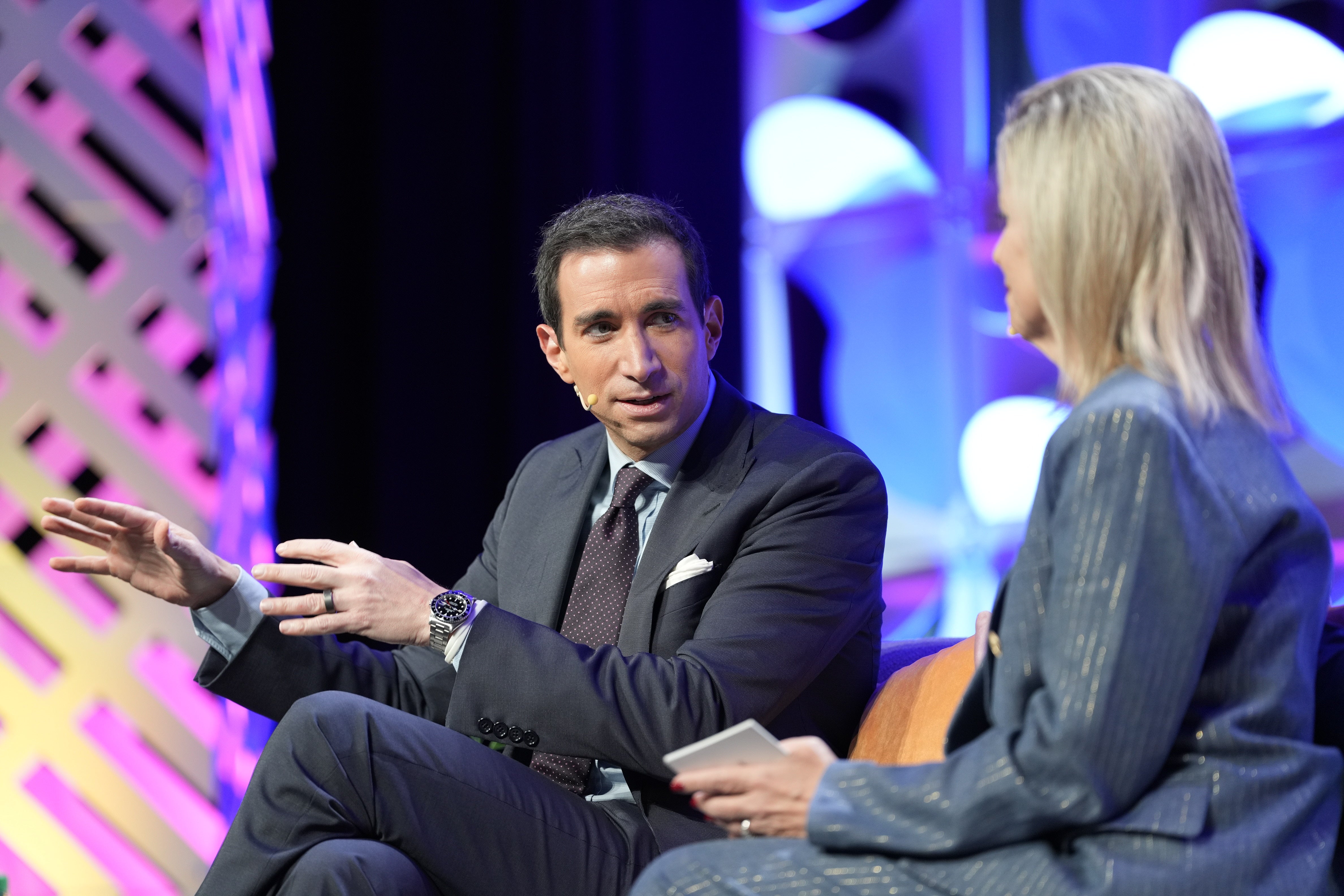
What makes business and legal leaders effective in times of change, in a world where most business leaders are public-facing figures? The opening plenary session of the 2025 ACC Annual Meeting shed light on key traits.
Below are six takeaways from the captivating interview with Andrew Ross Sorkin, bestselling author of Too Big to Fail, co-anchor of CNBC’s Squawk Box, founder of DealBook, and co-creator of Showtime’s Billions. Sorkin was interviewed by Paula Hansen, President & Chief Revenue Officer at Docusign, in front of a large audience of in-house lawyers.
- Build a reservoir of trust with your stakeholders inside and outside your organization, Sorkin shared. It takes time to build. This trust building helps you be credible and heard when tough situations or questions arises, whether you are talking to your CEO or answer questions from a journalist. Engage these stakeholders and develop these relationships early on, before a crisis is on the horizon or at your doorstep. If you meet a stakeholder for the first time when the crisis occurs, you haven’t established that pre-existing relationship and trust.
- Listen actively and do your best to answer the tough questions. It can be tempting to stick to talking points, instead of addressing uncomfortable questions. But people tend to view those who try to answer the difficult questions as more genuine. Let people see who you are. Is a question uncomfortable? This may mean pausing and acknowledging that this is an uncomfortable question, then trying to answer it as best as we can, as appropriate.
- Foster responsible transparency. When a crisis arises, communicating carries some risk, and not communicating also carries risk. Find the right balance.
- Don’t over-delegate responsibilities, especially in times of crisis. Successful leaders take things personally, Sorkin shared. They are emotionally invested; they care.
- Understand the global context and adapt. AI is transforming the way people approach legal work — they may be increasingly tempted to use AI tools for their legal needs without consulting legal professionals, for example to review and redline contracts and communicating with the other party.
- We can all use a dose of humility, and recognize that we may be wrong or not using the best reasoning and course of action. Challenge yourself. Have members of your team constructively question your ideas and each others’ ideas.
Key takeaway
- In Beyond the Rulebook, panelists explored how the legal department informs and assesses the culture of an organization. Much of the discussion revolved around using data to better understand and influence company culture.
- Panelists agreed that using a variety of data sources is the best way to provide a full picture of the company’s culture and commitment to compliance. For example, employee use of a hotline number can show behavioral patterns, while employee surveys provide insights on the employee’s opinions and intentions at a specific period in time.
- Sharing this data is critical to building employee trust and confidence in the processes the company uses to address legal and ethical concerns.
Fostering responsible innovation through AI
Adaptability is key, shared Andrea Oller, Area Compliance Counsel - North America, Ferrero U.S.A., Inc., in the session on Compliance Requirements for AI Systems under EU Legislation. In-house lawyers need to adapt, understand how AI can be used, and navigate business teams’ enthusiasm about using AI.
In this session, attendees learned about the EU AI Act’s risk-based approach for developers and deployers of AI systems. The session also featured insights from Paolo Gallarati, Partner, ADVANT; Angela Galloway, Associate General Counsel, Privacy, Meta Platforms Inc.; and Ekaterina Kitanina, Senior Commercial Counsel, Servicenow.
In the United States, there is no federal AI regulatory framework — the current federal trend is geared toward deregulation. At the US states’ level, however, a patchwork of state laws is emerging. In-house counsel must follow the developing regulatory landscape.

But helping the business navigate AI is not only about ensuring regulatory compliance. In-house lawyers are supporting responsible innovation, shared Brennan Torregrossa, General Counsel - US Commercial & Senior Vice President - Litigation and Investigations, GlaxoSmithKline, in the session on Corporate Artificial Intelligence Policy Design, Practice and Implementation.
In this session, attendees also heard practical insight on AI governance from David Baffa, Partner, Seyfarth Shaw LLP; Micah Heilbrun, Sr. Director, Labor & Employee Relations, Phillips 66; and Emily Vijayakirthi, Vice President, Global Compliance Counsel, T.Y. Lin International.
Put in place policies that are not focused only on mitigating risks, but also on driving innovation. Train employees on responsible AI use. Tie AI governance to your organization’s business goals to facilitate governance adoption by business teams.
In AI and the Intersection of Intellectual Property and Data Privacy, Jeffrey Huang, Sr. Assistant General Counsel, Textron Specialized Vehicles Inc.; Paul Liu, General Counsel, PacketFabric, Inc.; Jessica Nguyen, Deputy General Counsel, AI Innovation & Trust, DocuSign, Inc.; and John Rondini, Co-Chair Litigation, Brooks Kushman P.C. explored some of the key challenges businesses face when using AI — especially risks of IP infringement, and risks of disclosing trade secrets or personal information.
Among other tips: Ensure your contracts with vendors include robust privacy terms, and work with your IT team to examine vendors’ information security policies and practices.
Catch up quickly
- “Minutes are an art, not a science,” opined one of the panelists at Should You Be Writing This Down? How to Write Minutes that Matter. Panelists provided the audience with valuable insights to use when engaging in this “art.”
- Minutes are a record, not a transcript, recording what was done, rather than what was said. These guidelines provide a roadmap for board secretaries to follow when preparing minutes as they seek to provide enough detail to adequately convey the actions taken at a meeting without filling the minutes with unnecessary — and discoverable — detail.
- Panelists also raised the specter of AI in highlighting key considerations when determining whether to use AI in drafting minutes. These considerations include confidentiality, human oversight, and legal/governance issues.
Tips for Effective Outside Counsel Relationships
It takes two to dance, and they must be in sync. In The Quest for Creating and Managing Effective Outside Counsel Relationships, attendees heard practical strategies to foster effective collaboration between in-house and outside counsel, with insights from Abby Adams, VP, General Counsel, National Association of Home Builders; Jennifer Denny, Corporate Counsel, Cardinal Financial; Chantal Kazay Rivera, Senior Counsel - Commercial Litigation, McDonald’s Corporation; and Jennifer Nellany, Member, Cozen O'Connor. Below is a quick recap of some of five tips:
- As in many relationships, open communication is key.
- Put in place engagement letters and outside counsel guidelines that set clear expectations.
- Ensure your outside counsel understands your department’s goals and priorities.
- Don’t wait until you’re in a crisis to call your outside counsel, Abby Adams shared. Engage them early on.
- If you need to terminate the relationship, have a clear conversation with the outgoing outside counsel, and ensure an efficient transition to the new one.
Attendees also explored how AI tools could be used to facilitate the review of outside counsel’s bills against the client company’s billing guidelines.
Sunday, October 19
The 2025 ACC Annual Meeting kicked off with a packed Learning Lab: AI Prompt Engineering for In-house Lawyers, presented in cooperation with King & Spalding, where corporate counsel explored how artificial intelligence is reshaping legal work safely and effectively.
Why it matters: AI is trimming hours from research, drafting, and discovery. But using it responsibly is key to protecting privilege, confidentiality, and client trust.
What attendees learned:
- Smart safeguards: Attendees considered ethical and legal guardrails for AI use, previewing four high-impact legal workflows showing AI’s immediate value.
- Power-ups for practice: Attendees explored real-world use cases — from 50-state research to eDiscovery data extraction — to master prompt patterns and boost output.
- Hands-on lab: Attendees brought their laptops, tested AI tools, and customized safe workflows for their organizations.
Mural Arts Philadelphia Walking Tour
Attendees explored Philadelphia’s vibrant neighborhoods on the Mural Arts Walk, discovering why the city is known as the Mural Capital of the World through stunning public art and stories shared by expert guides.






Disclaimer: The information in any resource in this website should not be construed as legal advice or as a legal opinion on specific facts, and should not be considered representing the views of its authors, its sponsors, and/or ACC. These resources are not intended as a definitive statement on the subject addressed. Rather, they are intended to serve as a tool providing practical guidance and references for the busy in-house practitioner and other readers.