
Banner artwork by YuriArcursPeopleimages / Envato
When people think about the legal department, the words that often come to mind are “rules,” “risk,” and “deadlines.” Empathy is not usually on that list and yet, it should be. While these responsibilities remain central, there is a growing recognition that empathy, understanding, and valuing the perspectives of others is an equally powerful tool for an in-house counsel.
Far from being a “soft skill,” empathy strengthens relationships with internal clients, improves collaboration with cross-functional teams, and enhances the overall effectiveness of legal advice.
On June 6, 2025, the ACC Foundation hosted the Global Women in Law & Leadership virtual program, where we had the privilege of joining two other distinguished colleagues, Nikiwe Tanga, Chief Legal Officer, MTN Group Fintech and Aramide Nwokediuko, Company Secretary and General Counsel, Chemical and Allied Products, Plc, to discuss how this often-overlooked skill can reshape the way we work.
We explored what empathy really means in a corporate legal setting, why it matters, and how it can turn everyday legal interactions into opportunities for trust, collaboration, and better decision-making. Below are five key takeaways from the panel discussion:

Principal Consultant, Legal & M&A, MTN Group

Chidera Vanessa Okereke, Corporate Counsel, MTN Group


Empathy within the context of legal leadership
Empathy in legal leadership begins with creating an environment where people feel safe to speak openly. This means active listening, not to respond immediately, but to truly understand and guide others toward solutions that align with the business’s goals. Such an approach fosters collaboration and sustainable results, in contrast to a rigid, military style of management.
At its core, empathy is about putting yourself in another person’s position and seeing situations from their perspective. It is a strength, not a weakness, and one that enables legal leaders to inspire trust, improve decision-making, and build stronger connections across the organization. By leading with empathy, leaders (not just legal leaders) can reduce business risks and enable compliance because potential breaches or risks are escalated to the legal team early enough for pro-active problem solving.
Empathy in legal leadership begins with creating an environment where people feel safe to speak openly.
How the traditional perception of legal departments has created barriers to empathy
From the days of law school, the legal profession has been shaped by a culture of intense competition and perfectionism, where performance felt like a matter of survival. Emotional intelligence was rarely discussed, and there was little preparation for the realities of working in diverse, fast-paced environments.
In law firm practice, the relentless focus on billable hours often overshadowed opportunities for team bonding or mutual support. Mistakes, though inevitable, were viewed as unacceptable, and vulnerability in the workplace discouraged.
This mindset created significant barriers to empathy. In-house counsel, traditionally seen as the gatekeepers, were often perceived by other departments as the ones most likely to say “no.” While the bar for excellence remains high, the old ways of working are no longer sustainable. Today, empathy is not merely a “soft” skill, it is a critical, technical competency that enables legal teams to balance risk management with strategic partnership.
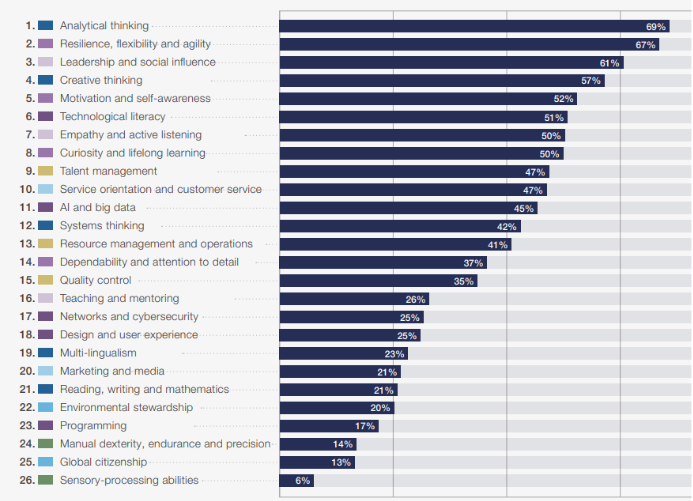
Table 1- 51 percent of employers rated empathy and active listening as a core skill in 2025.
Today, empathy is not merely a “soft” skill, it is a critical, technical competency that enables legal teams to balance risk management with strategic partnership.
Modelling emotional intelligence as leaders without compromising authority or objectivity
Emotional intelligence sharpens a leader’s ability to assess both risks and the surrounding context. It is not a sign of weakness, nor does it suggest a lack of decisiveness. Rather, it reflects the ability to understand your audience, regulate your own reactions, and make stakeholders and team members feel heard. It is about intentionally shaping your responses and behaviour to achieve the desired results. We must note that emotional intelligence and objectivity are not opposites, they work hand in hand to support sound decision-making.
Furthermore, authority today is no longer defined by being the “smartest person in the room” or by how much law you know, it is about being the person others want to follow. When your team trusts that you value them as individuals, not just for the work they produce, they are more willing to go the extra mile. Importantly, building connections beyond the daily workload, whether through shared interests, personal check-ins, or recognizing milestones helps strengthen that trust and creates a team that rallies together in challenging times.
Importantly, building connections beyond the daily workload, whether through shared interests, personal check-ins, or recognizing milestones helps strengthen that trust and creates a team that rallies together in challenging times.
How empathy can help resolve conflicts with clients or stakeholders (internal and external) more effectively
Businesses thrive when they create an environment where employees feel safe to self-report issues without fear of punishment. This openness builds trust between management and staff, reassuring people that they will be listened to with empathy and supported in finding constructive solutions to conflicts. When employees know they can speak up without negative repercussions, problems can be addressed early, and collaboration strengthens across the organization.
The same principle applies to external stakeholders. Service providers are essential partners, and sustaining those relationships requires fairness and mutual respect. This means avoiding negotiations that leave the other party with no room to succeed. By building relationships where service challenges, such as delays or operational issues can be raised and resolved amicably, both parties add value to each other’s businesses and reinforce a foundation of trust.
One of the most impactful tools is active listening.
How legal teams can support colleagues going through burnout using empathy
In fast-paced industries burnout is a real risk. Colleagues can become overwhelmed during high-stakes periods, whether it is an intense audit or contract negotiations under tight deadlines. In these moments, empathy enables legal leaders to offer meaningful support and foster a sense of team unity.
One of the most impactful tools is active listening. When a colleague opens up about their struggles, listening to understand rather than to respond creates a safe space for them to share openly. This not only builds trust but also reassures them that their challenges are acknowledged and taken seriously.
Empathy also drives practical support. This can mean helping to prioritize tasks, offering guidance on managing workload, connecting a colleague with stress-management resources, stepping in to redistribute certain tasks and simplify the process, resulting in stress reduction without compromising results. Empathy, in these cases, is not about grand gestures, it is about awareness and small acts of kindness that reinforce the fact that we are a team.
Conclusion
Empathy in the legal department is more than an admirable trait; it is a leadership imperative. It enables legal teams to strengthen internal collaboration, build lasting partnerships with external stakeholders, and approach high-pressure situations with clarity and composure.
By breaking away from outdated mindsets and embracing emotional intelligence as a core competency, legal leaders can create workplaces where trust, respect, and results thrive together. In doing so, we not only enhance the impact of our legal function but also shape a culture where people are inspired to give their best to the organization.
Disclaimer: The information in any resource in this website should not be construed as legal advice or as a legal opinion on specific facts, and should not be considered representing the views of its authors, its sponsors, and/or ACC. These resources are not intended as a definitive statement on the subject addressed. Rather, they are intended to serve as a tool providing practical guidance and references for the busy in-house practitioner and other readers.