To support your global practice, ACC Docket offers country-specific fun facts from your peers who’ve been there — literally.
| Economy | GDP (current US$) $434.503 billion |
| Forecast | Economic growth is projected to benefit from accelerating exports, but also to become more broad–based as domestic demand picks up, in spite of ongoing fiscal consolidation and a modest improvement in residential investment. Job creation is expected to slowly gather pace, leading to a slight fall in unemployment in 2015. Inflation will remain low, due to limited imported price pressures, sizeable economic slack and recent wage restraint, according to the Organisation for Economic Co-operation and Development. |
| Corruption | According to Transparency International’s “2014 Corruption Perception Index,” Belgium is the 15th “cleanest” (i.e., least corrupt) country out of the 175 that were scored. |
| Additional Resources | Official Belgium Government Site |
| European Union | |
| North Atlantic Treaty Organization | |
| Belgium Tourism Office |
In terms of size, Belgium is one of the smaller European countries. This means that you are never far away from the capital, an airport or the four neighboring countries: France, the Netherlands, Germany and Luxembourg. In fact, a large number of workers commute in and out of the country on a daily basis.
The country’s small size, however, belies its regional and linguistic complexity.
Belgium is a federal state divided into three regions: Dutch-speaking Flanders in the north; Francophone Wallonia in the south; and Brussels, the bilingual capital, where French and Dutch are both official languages. When first meeting a Belgian, his or her last name may help you identify his or her native language, but this also needs to be matched with first name, resume or location.
The three regions can make the work of lawyers and in-house counsel very complex. Although Belgium, like other civil law countries, has a highly codified legal system, the applicable rules governing regional matters such as tax, real estate, environment, etc. have to be analyzed each time at the local level, depending on the location of the property, the residence of the taxpayer or the place of incorporation, etc.
In contrast to the relatively small size of the country, Brussels is the center of prominent international decision-making institutions such as the European Commission, the European Parliament and NATO. Of course, this brings lots of cultural diversity to the city, which is readily apparent when walking or taking ground transportation. In the area surrounding the European institutions you are likely to find people speaking English.
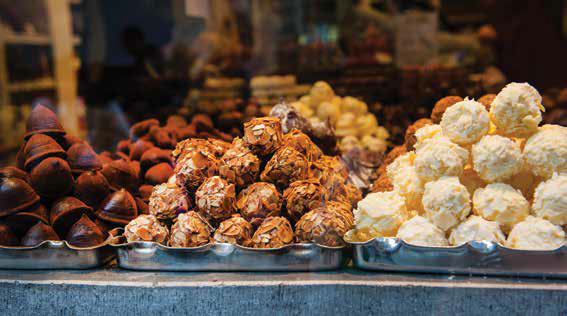
This multiculturalism makes Belgian people very open to other cultures, habits and traditions. The way Belgian people interact is, in general, very informal. In light of proven culinary excellence (not limited to very good chocolates), meetings or business discussions often happen over lunch or, if later in the day, over drinks (that’s when Belgian beer is enjoyed).
Despite its diversity, one constant remains across the whole country: the weather. With, rain, humidity and clouds featuring regularly and rather prominently in daily weather forecasts, it is best to keep an umbrella on hand.